Recent thoughts and media appearances
-
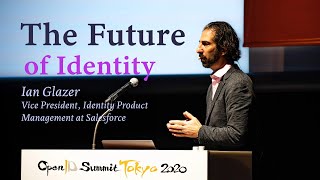
The Future of Digital Identity: 2020 - 2030
Some on the next 10-ish years in identity management.
[This was originally written in December 2019: pre-pandemic, pre-US presidential election, pre-George Floyd. Truly, it was written in the “Before Times.” I thought about updating this before posting but that felt wrong - somehow dishonest. So here is the lightly touched up text of my talk which was given first in Tokyo at the OpenID Foundation Summit and then again as part of the all-virtual Identiverse. If you want to skip the text and go straight to the video, you can!
Read more -
The Most Forgotten Thing In Identity Management
[What follows are some thoughts on usernames and identifiers. This was an extremely fun talk to put together. Many thanks as always to everyone who helped improve this talk including Chuck Mortimore and George Fletcher. – IG Sept 3 2019. If you don’t feel like reading everything, you check me out giving this talk at Identiverse in June of 2019.]
What I want to talk about
Usernames. They are the most forgotten, the most overlooked thing in our industry. They are, as we would say in the US, the “Gen X” of identity management. They show up; they do their job; they don’t get any credit. In fact, they do not get the same attention that their big brother “Password” and their little sister “Password-less” get. Instead, usernames do their job without thanks or recognition. But failing to pay attention to usernames can have major negative impacts to both B2B and B2C scenarios.
Read more -
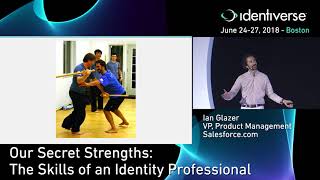
Finding your secret strengths
To grow your skills, you must know your skills. Problem is, that’s harder than it sounds, if only because we rarely carve time out of our hectic lives to do so. Might as well use these next few minutes to do so, and this post will give give a technique to help you along. We cannot think about our skills in a vacuum. It’s a well researched fact that humans are horrible at assessing their own skills. We often inflate skills we do not have. We downplay skills we do have. Simply put, we lie to ourselves about the strength of our skills. We need inner honesty. We need outside voices. We need feedback… in order to examine these skills we have and those we don’t.
Read more -
Privacy Sigma Riders!
A few months ago, I had the honor and pleasure to sit down with one of the most awesome people in Privacy, Michelle Dennedy, Chief Privacy Officer at Cisco, and record one of her Privacy Sigma Riders podcasts. We were in Austin. We were pumped to finally get together. We were heavily caffeinated. And we didn’t actually record anything… save for the last 25 secs of what was a 45 minute conversation. Fail… fail… fail!
Read more -
Why self-sovereign identity will get adopted (and it's not the reason you probably want)
(Thanks to Kim Cameron for prompting me to write this down. Special thanks to Chuck Mortimore for his insight and probing questions and who helped me improve this.) In the identity industry, there’s been a lot hype these days around self-sovereign identity. The latest permutation in the quest for user-centric identity, self-sovereign revisits the laudable goal of enabling people to be in better control of how information about them passes to enterprises and organizations (but now with added blockchain.) To be clear, increased individual control is an important goal and one that incredibly sharp people have been working on for 15+ years, going back to InfoCard and Higgins. Before I discuss why self-sovereign has a real chance at widespread adoption, it’s important to understand why identity technologies and approaches get adopted in the first place. At least, three things are required:
Read more